A full-size 8-foot slate pool table typically weighs between 700 and 1,000 pounds, while a 7-foot bar box can come in around 600 to 800 pounds and a 9-foot tournament table can push past 1,100 pounds. The number moves up and down mostly because of one component: the slate bed. Everything else — the frame, the rails, the legs — adds weight, but the stone underneath is what makes a pool table genuinely heavy.
Key Takeaways
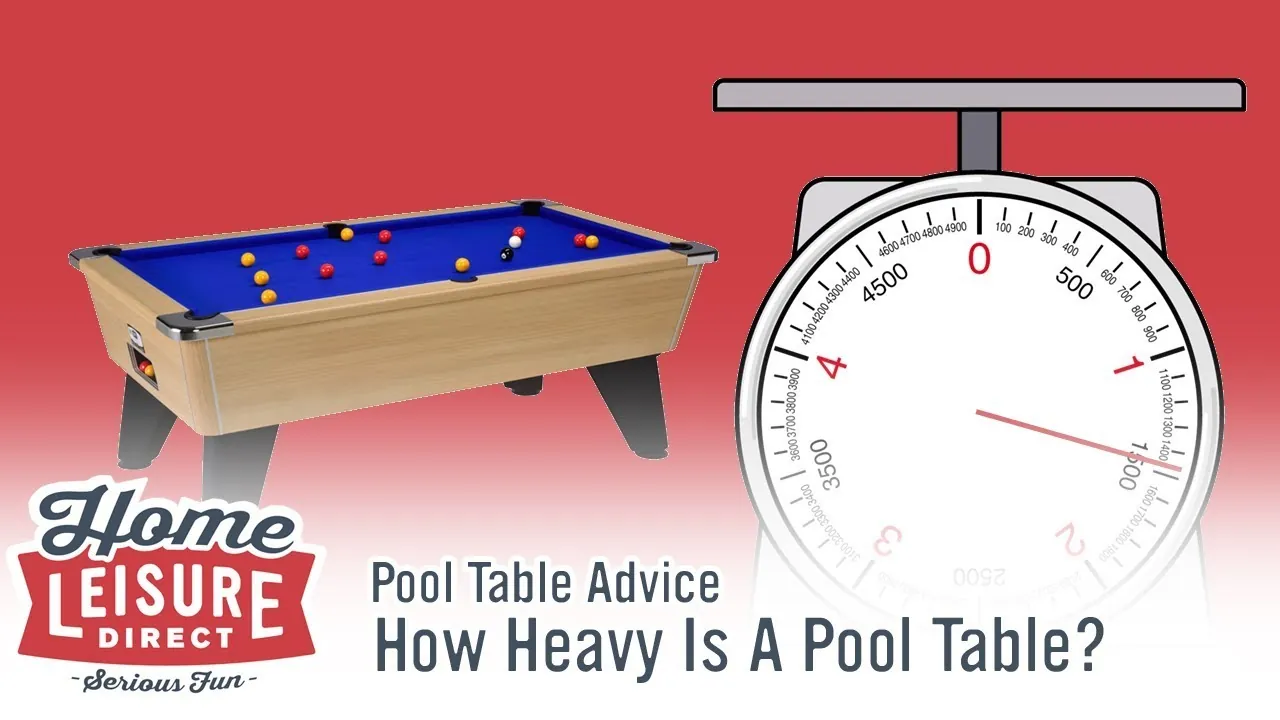
- A regulation 8-foot table with a 1-inch slate bed usually lands between 700 and 1,000 pounds.
- Slate is the single biggest factor: a 1-inch, 3-piece slate bed alone can weigh 400 to 600 pounds.
- A 7-foot bar box is lighter (roughly 600–800 pounds); a 9-foot tournament table is heavier (roughly 900–1,200 pounds).
- Tables with a 3/4-inch slate or a slatron/honeycomb core can weigh 250–500 pounds, but they play very differently.
- Weight is concentrated on 4 to 6 small footprint points, so floor loading matters as much as total pounds.
- Never move a slate table without disassembling it — the slate will crack and the frame can twist.
How Heavy Is a Pool Table, by Size
The table’s playing surface length is the fastest way to estimate weight. A longer table needs a longer, thicker slate bed, and the cabinet scales up with it.
| Table Size | Typical Slate | Typical Total Weight |
|---|---|---|
| 6 ft (child/home) | 3/4 in, 1 or 2 piece | 200–400 lb |
| 7 ft (bar box) | 1 in, 3 piece | 600–800 lb |
| 8 ft (home standard) | 1 in, 3 piece | 700–1,000 lb |
| 8.5 ft (oversized 8) | 1 in, 3 piece | 800–1,050 lb |
| 9 ft (tournament) | 1 in, 3 piece | 900–1,200 lb |
| 12 ft (snooker) | 1.5–2 in, 5 piece | 1,500–2,500 lb |
These are typical ranges, not exact figures, because two 8-foot tables from different makers can differ by 200 pounds depending on cabinet material and slate thickness.
Why Slate Makes a Table So Heavy
Slate is a dense, layered metamorphic rock, and pool tables use a ground and honed version of it because it stays flat and doesn’t warp with humidity. A 1-inch-thick slate bed for an 8-foot table is roughly 400 to 600 pounds on its own — often more than half the table’s total weight.
That’s why the slate almost always ships in three pieces rather than one slab. A single 8-foot slate would be nearly impossible to carry up a staircase and would crack under its own flex during handling.
One-Piece vs. Three-Piece Slate
- One-piece slate is more rigid and stays flatter, but it’s found mainly on smaller tables because a full-size single slab is a moving nightmare.
- Three-piece slate is the standard for 7-, 8-, and 9-foot tables. The seams are filled and leveled with beeswax or a comparable filler so the ball rolls true.
- Five-piece slate shows up on 12-foot snooker tables, again for handling reasons.
What the Frame and Cabinet Add
Below the slate sits the frame and cabinet, and this is where makers save or spend weight.
- Hardwood frames (oak, maple, poplar) are heavier and more stable than particleboard or MDF.
- MDF and particleboard cabinets are common on budget tables and cut weight, but they’re more vulnerable to moisture swelling.
- Legs and pedestals carry the load. Four thick legs, a trestle base, or a pedestal with a wide foot all change the number.
- Rails and pockets add maybe 40–100 pounds depending on material and hardware.
A solid hardwood 8-foot table with 1-inch slate can easily hit 1,000 pounds. The same footprint in MDF with 3/4-inch slate might come in near 400.
Non-Slate Tables Weigh Far Less
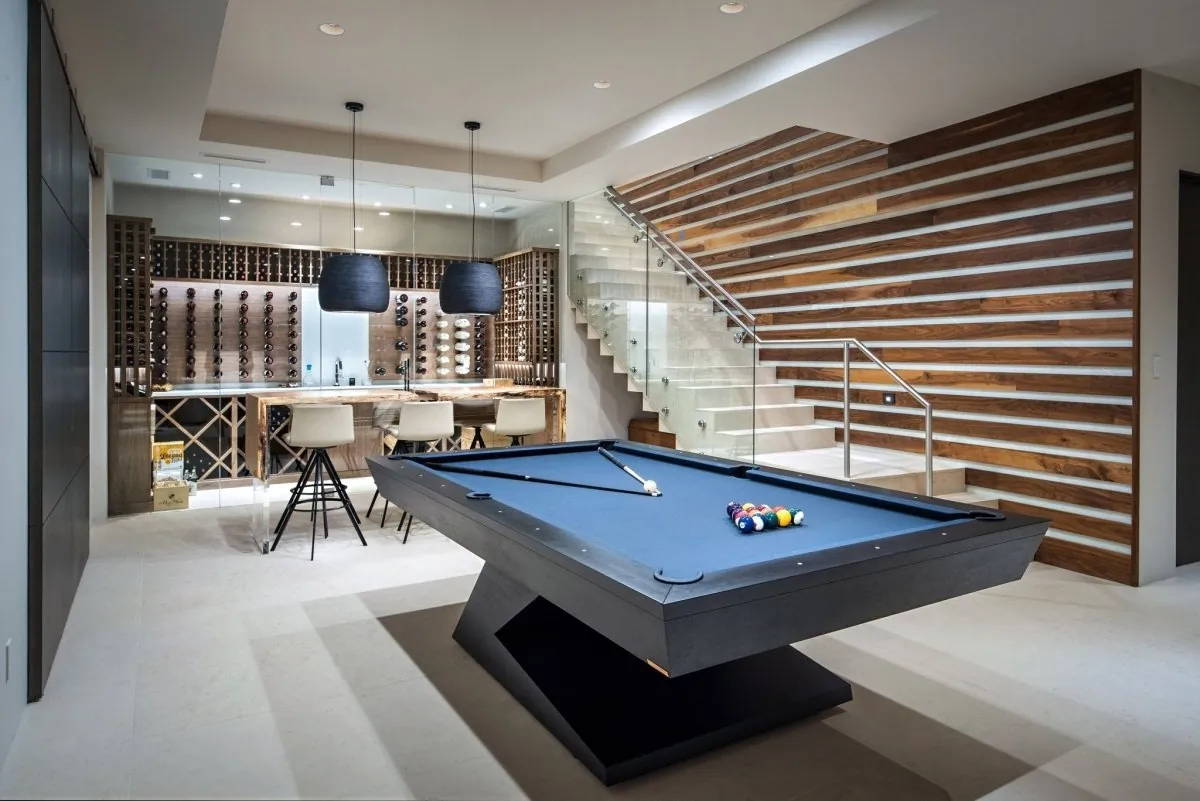
If you’ve seen a table listed at 200–300 pounds, it almost certainly isn’t slate.
| Bed Material | Typical Weight (8 ft) | Play Quality |
|---|---|---|
| 1 in slate | 700–1,000 lb | Tournament-grade, true roll |
| 3/4 in slate | 500–750 lb | Good, slightly less rigid |
| Slatron / honeycomb core | 250–400 lb | Entry-level, can warp or dent |
| MDF bed | 150–300 lb | Toy-grade, not for serious play |
Slatron is a resin-and-wood composite bed used on budget tables. It’s light and cheap, but it dents, and it won’t hold a level the way stone does.
Can Your Floor Handle the Weight?
This is the part most buyers skip. A 900-pound table doesn’t spread that load evenly across the room — it concentrates it on four to six footprint points, often just a few square inches each.
- On a concrete slab, you’re almost always fine.
- On a wood-framed floor, a heavy table is roughly equivalent to a loaded bookshelf or a full bathtub, but concentrated on small feet. Running the table’s length perpendicular to the floor joists spreads the load across more of them.
- On an upper floor, check joist direction and span before delivery. If you’re unsure, a structural engineer or contractor can confirm in a short visit.
- Floor protection matters too: coasters or a rug under the feet prevent denting hardwood and help level the table.
Warning: Never assume a second-floor room is fine just because the table “fit.” Weight and span matter more than square footage.
Moving and Delivery Realities
A slate table isn’t a furniture piece you slide across a room. It’s a disassembly job.
- Remove the rails and pockets — usually bolts from underneath.
- Lift the slate in its sections — each piece of an 8-foot slate can weigh 100–200 pounds, so two people minimum, three is better.
- Separate the cabinet from the base, then move each part.
- Reassemble, level, and re-fill the seams — this is the step amateurs get wrong.
- Re-cover and re-level the bed after assembly.
Professional movers who specialize in pool tables typically charge by distance and table size, and the price reflects the labor and the risk of cracking slate. If your table is slate, hiring a certified table mechanic is usually cheaper than replacing a cracked bed.
Does Weight Affect How It Plays?
Indirectly, yes. Heavier tables tend to be more rigid, and rigidity is what keeps the slate flat and the rails true over years of play. A heavy hardwood cabinet resists the twisting that throws a table out of level.
But weight alone isn’t a quality score. A well-built 3/4-inch slate table can play beautifully, and a heavy table with a warped bed still plays badly. Look at slate thickness, slate flatness, rail rubber quality, and frame joinery — not just the scale number.
How to Find Your Table’s Exact Weight

- Check the manufacturer’s spec sheet or owner’s manual — most list shipping weight and assembled weight separately.
- Search the model number plus “specifications” on the maker’s official site.
- Weigh the slate separately if you’re moving it: slate density is roughly 175 lb per cubic foot, so you can estimate from dimensions.
- Ask the dealer before delivery; they usually know the shipping weight, which includes packaging and pallet.
Pro Tip: Shipping weight runs 50–150 pounds above assembled weight because of crating and pallet. Don’t use it as your floor-loading number.
Related guides
Frequently Asked Questions
How much does a 7-foot pool table weigh?
A 7-foot bar box with a 1-inch, three-piece slate bed typically weighs 600 to 800 pounds. Cheaper 7-foot tables with a composite bed can weigh as little as 250 to 400 pounds. The slate is the deciding factor, so check the spec sheet rather than assuming from size alone.
Can two people move a pool table?
Two strong people can move a slate table only after full disassembly, and even then each slate section of an 8-foot table weighs 100 to 200 pounds. Moving an assembled slate table with two people risks cracking the slate and damaging the frame. Hire a table mechanic for anything slate.
Do pool tables have to be taken apart to move?
Yes, if they have a slate bed. The slate must come off before the cabinet moves, or it will flex and crack. Composite-bed tables can sometimes be moved whole, but they’re still awkward and prone to damage. Plan on disassembly for any real table.
How much does a 9-foot tournament table weigh?
A 9-foot tournament table with a 1-inch, three-piece slate bed generally weighs 900 to 1,200 pounds. Some heavy hardwood models with thick cabinets exceed that. Because the slate sections are larger, each piece is heavier and harder to handle than on an 8-foot table.
Is a heavier pool table better?
Not automatically. Weight usually signals a thicker slate and a solid hardwood frame, which help the table stay flat and true. But a heavy table with poor slate flatness or worn rail rubber still plays badly. Judge slate thickness, flatness, and rail quality alongside weight.
Will a pool table fall through my floor?
On a standard wood-framed floor in good condition, a residential pool table is well within normal loading, similar to a large loaded bookshelf or a full tub. Problems arise with damaged joists, long unsupported spans, or upper floors. If you’re unsure, have a contractor check the joists before delivery.
Conclusion
If you’re buying or moving a table, start by confirming the slate thickness and piece count, then measure your doorways, stair turns, and the room’s joist direction before delivery day. Those three checks prevent almost every expensive surprise.