A pool table is level when the slate bed — not the cabinet, not the rails — sits perfectly horizontal in every direction, so a ball placed anywhere on the cloth stays put instead of drifting toward one corner. Leveling is a two-part job: making the slate flat side-to-side and end-to-end, then making sure the legs and frame hold it there without rocking. Most tables drift out of level because the floor settles, the legs shift, or the slate seams move slightly over years of play. The good news is that a basic leveling job takes about 30–60 minutes with a 4-foot spirit level, a wrench, and a set of shims, and you don’t need to disassemble the table.
Key Takeaways

- Always level the slate, not the rails or the cabinet top — the playing surface is what matters.
- Check level in four directions: left-to-right, end-to-end, and both diagonals across the slate.
- Most tables adjust with leg levelers (threaded feet) or shims under the legs; three-piece slates may also need seam adjustment.
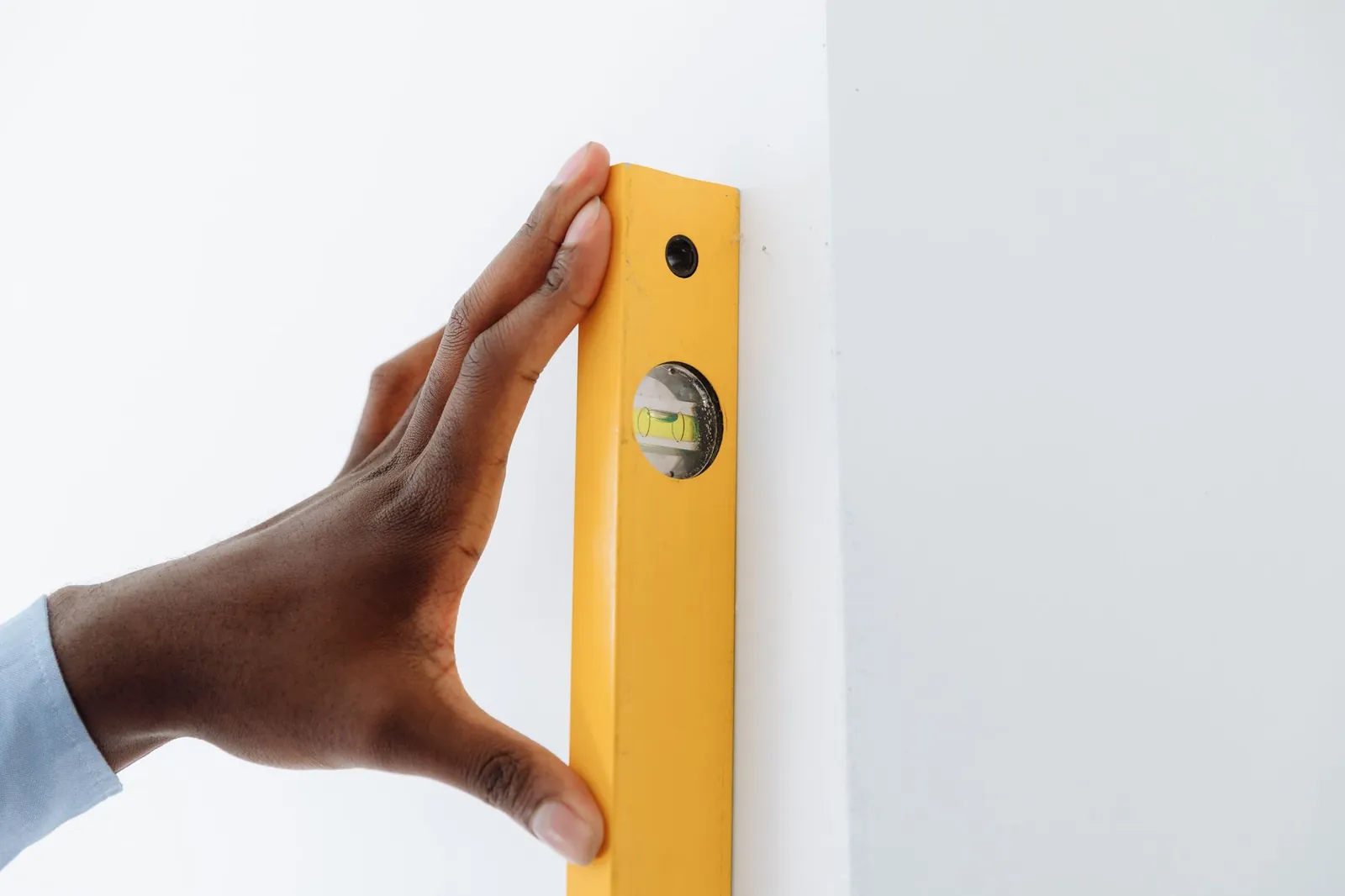
- A 4-foot or 6-foot spirit level is the minimum tool; a 2-foot level misses long runs of tilt.
- Recheck level after moving the table, after any floor work, and roughly once a year in a home.
- If the slate itself is warped or a seam has lifted, no amount of leg adjustment fixes it — that’s a mechanic’s job.
What “Level” Actually Means on a Pool Table
A pool table has three layers that matter: the cabinet (the wooden body), the slate (the heavy stone bed the cloth covers), and the rails (the cushioned edges). Only the slate determines whether the ball rolls true.
A table can look perfectly level at the cabinet and still play badly because the slate sits slightly tilted on its frame. This is why you never trust a level placed on the rails or the outer edge of the wood. You check the surface the balls actually roll on.
There’s also a difference between level and flat. Level means the whole bed is horizontal relative to gravity. Flat means there are no dips or humps within the slate itself. You can have a perfectly level table with a low spot in the middle, and balls will still drift.
Tools and Materials You Need
Gather everything before you start, because you’ll be going back and forth between the table and your toolbox.
| Tool | Why You Need It |
|---|---|
| 4-ft or 6-ft spirit level | Long enough to catch gradual tilt across the slate |
| 2-ft level | Useful for checking individual slate sections and seams |
| Open-end or adjustable wrench | Turns leg levelers and rail bolts |
| Wood or composite shims | Goes under legs when there are no levelers |
| Playing card or business card | Quick shim for fine adjustment |
| Helper | Makes diagonal checks and shim placement far easier |
Pro Tip: A long level isn’t a luxury. A 2-foot level can read perfectly centered while the far end of a 7- or 8-foot slate is a quarter inch low. Borrow or buy a 4-foot level before you begin.
Step 1: Clear and Inspect the Table
Remove all balls, cues, and rack. Take the cover off. Look at the cloth for any obvious dips, ripples, or raised seams — these tell you where problems are before you even place a level.
Check the floor under each leg. Carpet, rugs, and uneven concrete are the most common culprits. If the table sits on thick carpet, the legs will compress differently over time, which is a normal cause of drift.
Step 2: Check Level in Four Directions
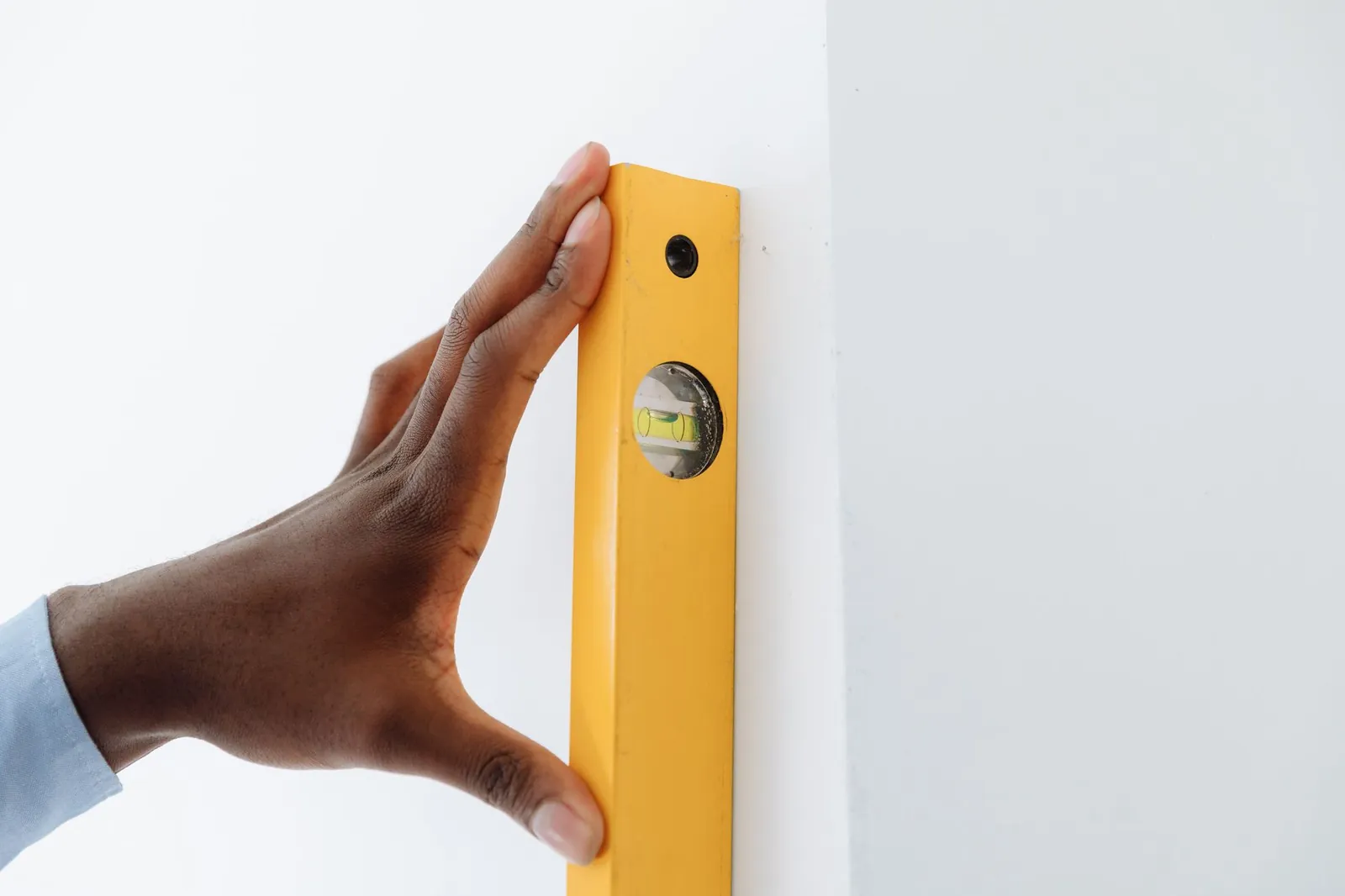
Place your long level on the slate and read it in these positions:
- Side to side (across the width, near the head and near the foot)
- End to end (down the length, along both long rails)
- Diagonal one way (corner to corner)
- Diagonal the other way
Write down which direction shows the bubble off-center. That tells you which corner or side is high or low.
Warning: Never place a level on the rails and assume the slate matches. Rails are frequently shimmed or bolted slightly off from the bed, and chasing rail level will send you in circles.
Step 3: Adjust the Legs or Add Shims
Most modern tables have threaded leg levelers — a foot that screws in or out. Turn the leveler on the low corner counterclockwise (out) to raise it, or clockwise (in) to lower it. Make small turns, a quarter rotation at a time, and recheck after each.
If your table has plain wooden legs with no levelers, you shim. Slide a shim under the low leg, tap it in until the bubble centers, then snap or trim the excess so it doesn’t stick out as a trip hazard. A stack of two or three thin shims works better than one thick one because it lets you fine-tune.
| Symptom | Likely Fix |
|---|---|
| Bubble off on one corner | Raise that corner’s leveler or shim that leg |
| Bubble off end-to-end only | Both legs on one short side need adjusting |
| Bubble off diagonally | Two opposite corners are mismatched; adjust one at a time |
| Table rocks when nudged | One leg is short; shim it until all four bear weight |
Step 4: Handle Three-Piece Slates
Many 7- and 8-foot tables use a three-piece slate — three stone sections butted together with seams. Each section can tilt independently, so leveling the legs alone isn’t enough.
Check each section with the short level, then check across each seam with the long level. If a seam is high or low, there are usually slate adjusters or shims beneath the slate that a mechanic can tune. On some tables you can reach these from underneath; on others the rails and cloth must come off first.
This is the point where most homeowners should stop and call a professional. Lifting slate is heavy, and a cracked section is expensive to replace.
Step 5: Recheck Everything
After every adjustment, walk the level around the table again in all four directions. It’s normal to chase the bubble for a few rounds — raising one corner slightly lowers the opposite one.
When the bubble centers in every direction and the table no longer rocks, you’re done. Roll a few balls slowly by hand from each corner and watch whether they curve. A ball that drifts consistently toward one side means you’re close but not finished.
When to Call a Professional
Call a pool table mechanic if any of these apply:
- The slate is cracked, chipped, or visibly warped
- A seam has lifted and won’t sit flush
- The table is a three-piece slate and the adjusters aren’t accessible
- The frame itself is racked or the cabinet is separating
- You need the table moved to a different room or floor
A professional leveling and re-cloth typically runs a few hundred dollars in most US markets, and moving a table usually costs more because it involves full disassembly. For a table worth several thousand dollars, that fee protects the slate. The Billiard Congress of America publishes equipment standards that mechanics reference for slate thickness and bed flatness.
How Often to Recheck Level
| Situation | When to Recheck |
|---|---|
| New table installed | Immediately, then again after one month |
| Table on carpet | Every 6–12 months |
| Table on concrete or hardwood | Every 12 months |
| After moving the table | Immediately, before play |
| After any floor work or flooding | Immediately |
| After heavy use (bars, halls) | Monthly |
Related guides
- 10 Best Pool Tables for Home: Top Picks Here!
- 10 Best Portable Pool Table Legs for Game Rooms
- Best Mini Pool Table for Kids: 10 Picks for Any Room
Frequently Asked Questions
Can I level a pool table by myself?
Yes, for leg-leveler and shim adjustments. A helper makes it faster and safer, especially for diagonal checks and lifting a corner. Anything involving slate removal or seam repair should be done by two people or a professional mechanic.
Do I need to take the felt off to level a table?
No, not for leg or shim adjustments. You only remove cloth if the slate itself needs to be re-shimmed or a seam has to be reset, which is a mechanic’s job on most tables.
Why does my pool table keep going out of level?
The usual causes are a settling floor, compression of carpet under the legs, loose leg levelers, and seasonal humidity changes in the wood frame. Tables on carpet drift fastest because the padding compresses unevenly.
Is a pool table level if the bubble is centered?
Centered in one direction isn’t enough. The bubble must center side-to-side, end-to-end, and on both diagonals. A table can read level across the width and still be tilted down its length.
Can I use a phone level app instead of a spirit level?
Phone apps are convenient but less accurate than a long spirit level, and they’re too short to detect gradual tilt across a full slate. Use an app for a quick sanity check, then confirm with a 4-foot level.
How much does professional pool table leveling cost?
In most US markets, a service call to level and re-cloth a table typically runs a few hundred dollars, with moving costing more. Prices vary by region, table size, and whether the slate needs work, so get a quote first.
Conclusion
Once the bubble sits centered in all four directions and a slow-rolled ball travels straight, your table is ready for play — so grab your long level, spend half an hour on the legs, and if the slate itself fights back, book a mechanic rather than risk the stone.